



A global surveillance network to stop the next pandemic before it starts
All countries—across all income levels—are dangerously unprepared to meet future infectious disease threats. Sentinel, an early-warning outbreak system, will save thousands of lives each year—and help us to avert future pandemics.
Relevant Stats
Paragraph introducing any relevant stats.
Project
Description
Problem
Viral pandemics are one of the greatest risks to humanity. Despite taking giant leaps in technology and science, we are more vulnerable today than we were 100 years ago. As COVID-19 made painfully obvious, viruses can travel farther and faster than ever, spreading across the globe in weeks, making the rapid detection and containment of diseases critical. Yet there is no systematic way to detect and track outbreaks. Disease diagnostics and surveillance practices are outdated, and tests for many viruses do not exist. As a result, outbreaks are often only detected once too many people become ill, when its typically too late to stop an epidemic. Meanwhile, the forces that drive pandemics—climate change, habitat encroachment, global mobility, and weakening health systems—are accelerating the emergence and spread of new diseases, while new gene-editing technologies and generative AI raise the specter of bioterrorism. West Africa bears a disproportionate share of the burden of emerging pathogens, accounting for 41 percent of all outbreaks reported to the WHO between 2020 and 2024.
Big Idea
The Institute of Genomics and Global Health (IGH; formerly the African Centre of Excellence for Genomics of Infectious Diseases), the Broad Institute, and their partners have a bold plan to get ahead of pandemic outbreaks: by building and deploying Sentinel, a pandemic preemption system that detects viral threats in real time and helps stop them before they spread. Sentinel uses a three-part approach to detect viruses, connect data systems, and empower the healthcare community, allowing us to respond to emerging viral threats in real time, wherever they arise. Building on our ability to identify high priority viruses within an hour using simple point-of-care tests, we are working toward identifying any known human virus within a day and unknown viruses within a week. Using mobile applications and advanced dashboards, this information will be shared across the public health community in real time.
Plan
Leveraging ultra-sensitive genomic and CRISPR technology, IGH and Broad teams have developed powerful tests that can detect virtually any pathogen. For example, they have created a testing platform, CARMEN, that can detect dozens of priority pathogens across hundreds of samples, reducing costs to under $1 per target. They are also using AI-driven tools to accelerate the development of new tests. Through the Audacious investment, the team have also developed a user-friendly information system, called Lookout, to continuously collect, integrate, and share viral surveillance data, and empower the entire public health community—from frontline workers to national authorities—that has already been deployed nationwide in Sierra Leone and will be rolled out in other African countries. By unifying these tools into a coherent system, for the first time, we are able to detect and prevent pandemics on the ground before they start.
Proven Impact
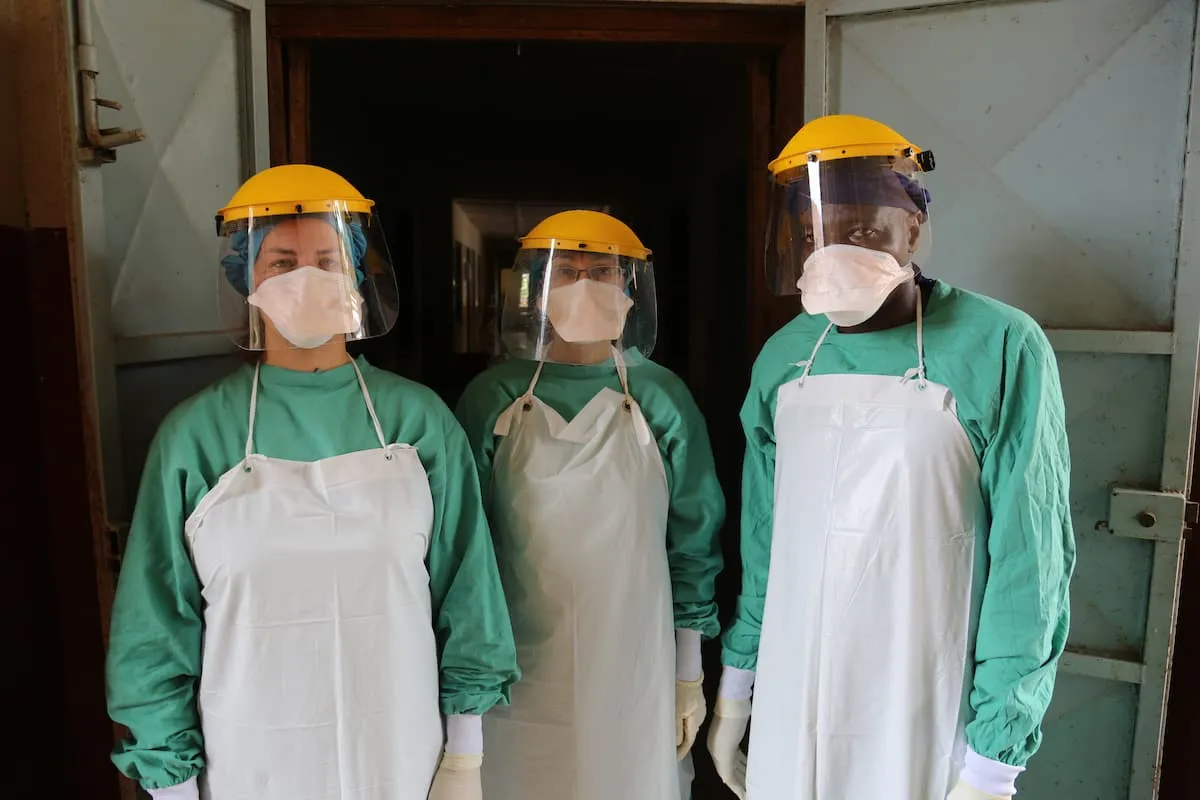
Since its launch in 2020, Sentinel has supported continuous disease monitoring and rapid outbreak response in Nigeria and Sierra Leone. During COVID-19, Sentinel helped test more than 30 million people, sequenced Africa’s first SARS-CoV-2 genome within 72 hours, and led genomic surveillance across 26 countries. To date, Sentinel has trained more than 3,000 professionals across 53 African countries, strengthening a continent-wide network of scientists and public health leaders. Sentinel continues to deliver real-time impact: tracing mpox outbreaks in Nigeria to guide targeted vaccination strategies, helping Rwanda rapidly contain a Marburg virus outbreak with far lower mortality than historical rates, and enabling near real-time genomic analysis during fast-moving outbreaks such as mpox in Sierra Leone. By combining cutting-edge genomic tools with locally led public health response, Sentinel is expanding the depth and breadth of pathogen surveillance in Nigeria and Sierra Leone and scaling the framework to new regions across Africa.





.jpg)


.jpg)

