

Authors
Categories
Subscribe for updates
September 9, 2026
Inside Philanthropy
The Audacious Project on Getting the AI Nouveau Riche to Give More
Over the past six months, give or take, the philanthrosphere’s chattering class has been ruminating on the potential giving behaviors of people enriched by the AI boom, including OpenAI and Anthropic employees poised to become incredibly wealthy after their companies go public.
These individuals are relatively young and we tend to assume they will shunt money into donor-advised funds. That’s because they’re working 15-hour days, and many will likely table substantial giving for years, if not decades — a phenomenon that Silicon Valley wealth advisors call “the pause.” Other speculation holds that AI employees want to move money out the door, and if they do, they’ll be inclined to support organizations focused on AI safety risks and other issues that fall under the umbrella of effective altruism.
The key phrase in that sentence is “if they do.”
Some of us here at IP aren’t sold on the premise that the coming wave of AI millionaires and billionaires will give at a level that eclipses — or even matches — that of their predecessors in tech. Moreover, by waiting for a rapturous wave of giving that may not fully materialize anytime soon, we lose sight of the more immediate fact that members of today’s gilded class largely aren’t moving money into the hands of working charities at anywhere near the level they could — and why should tomorrow’s ultra-rich tech donors act so very differently from today’s?
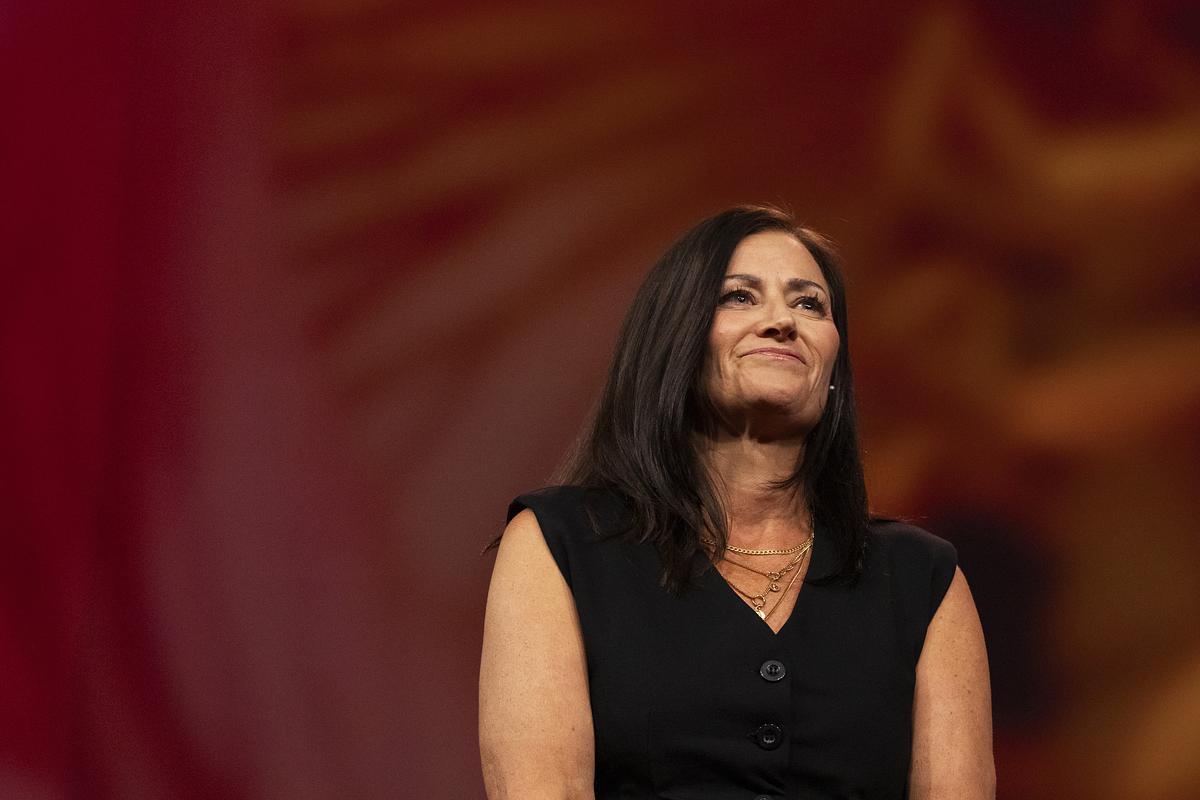
Nevertheless, the coming era will certainly yield many new, very large philanthropic fortunes, and a continued expansion of existing ones, particularly in tech. “It is an exciting time, to be sure, and emerging AI wealth is just one piece of a much larger, still mostly untapped philanthropic opportunity,” said Anna Verghese, executive director of The Audacious Project, the collaborative funding platform housed at the nonprofit TED that aims to support big ideas to solve the world’s most pressing problems.
Verghese should know. The project’s partner base includes numerous tech donors attuned to timely trends in the sector, including, quite naturally, the oncoming wave of AI wealth. She’s also deeply attuned to why many individuals in this demographic, despite their ever-growing fortunes, do not embrace meaningful charitable giving.
“There is an enormous amount of existing wealth held by longer-established billionaires and ultra-high-net-worth individuals that hasn’t yet found its way to the causes that need it most,” she said. “So alongside the question of what new donors may need, a more urgent one is how the field activates capital that already exists and is sitting on the sidelines today.”
A quick refresher on The Audacious Project
Launched in 2018, The Audacious Project operates less like a traditional foundation than a highly selective competition. Here’s how the process works.
First, the project sources ideas for tackling global problems from the public and from its network of partners and donors. The team then narrows that field down to a group of finalists whose ideas “are representative of a broad range of geographies and issue areas while elevating leaders with proximity to the communities they serve.”
After each finalist undergoes an extensive due diligence process, projects are presented privately to groups of donors and then publicly presented at TED, a practice that my colleague Michael Kavate described as “like something between a charity gala and ‘Shark Tank.’” Individual funders — not TED — decide what to fund and how much to commit. Over time, funded projects share updates with donors and the public.
“Audacious was intentionally designed to not be a pooled fund or a pass-through,” Verghese said. “Multi-year grants flow directly from the donors to the recipient organizations they choose to fund. Our goal is to build direct, long-term relationships between the philanthropists and the nonprofit organizations and their leaders.” In cases where the donor opts for a more hands-off approach, the Audacious team can support the nonprofit over the course of the grant.
Since the project’s launch, Audacious donors have included 52 individuals and families, many of whom derive their wealth from tech. Notable names include MacKenzie Scott, Melinda French Gates, Reed Hastings and Patty Quillin, Laurene Powell Jobs’ Emerson Collective, Connie Ballmer and her son Sam Ballmer, ELMA Philanthropies, and the Skoll and Valhalla foundations.
Donors have committed more than $4.6 billion in direct funding to 70 projects across seven cycles. According to Audacious, that funding has enabled grantees to leverage an additional $4.2 billion from other sources, bringing the total of what Verghese called “catalyzed impact” to $8.8 billion. In addition, the total number of projects supported by Audacious donors over multiple funding cycles has grown year over year, as has the amount of funding committed.
The project announced its latest cohort in early 2026. Donors committed a record $1.03 billion in total funding to projects focused on a variety of causes including reducing plastic production, protecting children from lead poisoning, and closing the college-to-career gap for low-income and first-generation college students in the United States.
How The Audacious Project addresses obstacles to giving
The Audacious Project’s apparent success in spurring giving by the very rich offers a vantage point on one of philanthropy’s most persistently vexing questions: Generally speaking, why don’t ultra-high-net-worth individuals give more?
Some oft-cited reasons, such as an unwillingness to see their net worth decline or a desire to pass along their fortunes to their heirs, fall more squarely into the realm of psychology than of philanthropic strategy. There are other areas, however, where platforms like The Audacious Project can reduce what advisors like Bridespan’s Jeff Bradach call the “friction” that compels donors to refrain from giving.
Verghese noted that Audacious donors appreciate that projects are “rigorously vetted and presented as shovel-ready for investment,” and value the “boldness of the ideas themselves.” These inputs address donors’ well-documented fear that they won’t generate the maximum bang for their charitable buck. Moreover, a rigorous empirical approach resonates with donors in the tech space who tend to prioritize quantitative over qualitative measurements.
Audacious donors also appreciate the “joy and ease that comes with being able to make these big, thrilling bets in community with a group of values-aligned, seasoned peers,” Verghese said. This is a subtle but important point. Donors often make grantmaking decisions based on their gut or the advice of a handful of trusted associates, creating conditions favoring the same usual grantee suspects. While there is nothing inherently wrong with this approach, Verghese’s perspective suggests that donors value the opportunity to give alongside those with whom they share something in common — both as a means of affirmation and a way to ward off the scrutiny that can come with going it alone.
Donors can “embrace smart, bold risks together in community, learn from successes (and setbacks) and find their own appetite and voice along the way,” Verghese said. “Audacious’ issue-agnostic approach provides an easy on-ramp for those with an appetite to simply get started!”
Advice for tech workers coming into serious wealth
Reuters recently reported that Anthropic could go public as early as mid-October and could be valued as much as $2 trillion. Meanwhile, Sam Altman is lobbying for a $1 trillion OpenAI IPO that could materialize by 2027.
While there’s a tendency to place donors in distinct demographic buckets, nothing suggests that a soon-to-be-rich OpenAI employee will approach giving in a way that’s fundamentally different from other tech donors. If an OpenAI employee experiences a “sudden wealth event” with tax implications, they’ll likely put money into a DAF at the behest of their wealth advisor. Then, at some point, that individual will confront the myriad psychological and practical factors that conspire to keep charitable dollars on the sidelines.
Verghese positioned Audacious and its fellow collaborative giving vehicles as an antidote. “If an OpenAI or Anthropic employee were to reach out to us with a desire to engage today, we’d immediately point them to the collaborative philanthropy ecosystem,” Verghese said. “The Audacious Project, Blue Meridian Partners, Climate Lead, Coefficient Giving, Co-Impact, GiveWell, ICONIQ Impact, Lever for Change and Renaissance Philanthropy are examples that have each built deep and hard-won expertise in sourcing and supporting high-impact initiatives.”
That very list is one subtle rebuttal of the recently posited contention that the philanthrosphere needs “(potentially many) more ‘philanthropic VCs’” to manage the torrent of incoming AI wealth. We also shouldn’t discount Silicon Valley Community Foundation CEO Nicole Taylor’s contention that the country’s 800-plus community foundations can help AI workers based outside the Valley to channel charitable dollars to impactful local nonprofits.
The bottom line here is that AI founders and employees sitting on tens of billions of dollars in potential DAF assets have plenty of options if they need help moving money to effective charities. If some of those newly rich are aligned with the principles of effective altruism, that’s great — The Audacious Project has funded projects in AI safety and pandemic prevention. But vehicles like Audacious will also introduce donors to projects in fields outside of their thematic comfort zones. “The sector benefits when there’s more than one lens for identifying what’s worth backing, not just one dominant framework for measuring impact,” Verghese said.
The Audacious Project’s next annual donor gathering will take place this fall, where funders will convene to commit support to the newest cohort of projects. Audacious will publicly announce the next grantee cohort around the TED2027 Conference in San Diego, California, from March 1–4, 2027.
Until then, Verghese offered advice for tech workers who want to engage in meaningful philanthropy.
“Start early, lean on vetted networks and the leadership and expertise that already exists, and build your own philanthropic muscle over time,” she said. “You don’t need to build out a whole team or create a foundation to start giving — especially when you participate in a collaborative vehicle. You also get more leverage on your investment. The best way to learn is by doing.”
Lastly — and most importantly, Verghese said — have fun. “Philanthropy should feel exciting and be joyful. You don’t need to have it all figured out before getting started. Giving to the things that light you up might not always feel like the most strategic, but if it’s going to keep you engaged in philanthropy longer, it will ultimately have more impact.”